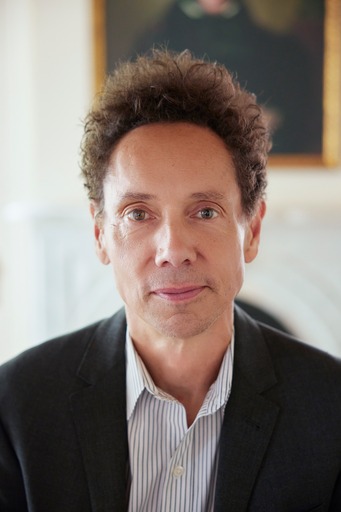
MALCOLM GLADWELL

The American Way of Killing is Malcolm Gladwell's newest book
PRE-ORDER YOUR COPY TODAY
Buy from AmazonBuy Audiobook from AudibleBuy from Barnes and NobleBuy Audiobook from PushkinBuy from Bookshop

#1 New York Times bestselling author Malcolm Gladwell’s most urgent book yet.

The United States has far more homicides than any of its peers around the world. Why?

"This is NOT gun control
A tall, slender flagpole with a small ball finial on top, shown on a transparent background.
This is gun control theater."
"This is NOT gun control,
The American way of killing is available in hardcover and audio

The American Way of Killing

The American Way of Killing

BY MALCOLM GLADWELL

In this groundbreaking book, Malcolm Gladwell explores the American “peculiarity”—how the world’s wealthiest country came to suffer from a problem typically only seen in the world’s poorest countries.

Drawing on original interviews, archival and social science research, and his trademark insight, Gladwell approaches the American paradox through a series of stories. What can we learn from the miracle of a young gunshot victim in Washington, D.C.? How have the legal troubles of a seventeenth-century English knight influenced American attempts at gun control? Why would a European police chief be baffled by the graduation ceremony at any American police academy?

In a sweeping narrative, Gladwell travels from a shooting range in North Carolina, to the South Side of Chicago, to an old plantation house in Alabama, painting a picture of a country that does not understand its most pressing social problem, and as result, does not understand how to fix it.
PRE-ORDER YOUR COPY
AVAILABLE IN HARDCOVER, EBOOK, AND AUDIO
Buy from AmazonBuy Audiobook from AudibleBuy from Barnes & NobleBuy Audiobook from PushkinBuy from Bookshop
EARLY PRAISE

"EYEOPENING...

At every turn in this arresting, informative, and invaluable inquiry, Gladwell reveals hidden realities and contrasts honest versus dishonest discourse.”

- BOOKLIST

PRE-ORDER YOUR COPY TODAY
Buy from AmazonBuy Audiobook from AudibleBuy from Barnes & NobleBuy Audiobook from PushkinBuy from Bookshop

THE AMERICAN WAY BOOK TOUR

Join Malcolm Gladwell in conversation about his latest book, The American Way of Killing, a provocative investigation of America’s epidemic of gun violence.

TUE
SEP
6:00 PM
29
New York, NY
92NY
GET TICKETS
THU
OCT
8:00 PM
1
Los Angeles, CA
Live Talks LA at Robert Frost Auditorium
GET TICKETS
SAT
OCT
7:30 PM
3
San Francisco, CA
Sydney Goldstein Theater with City Arts
GET TICKETS
Black right-pointing thick arrow on a white background.
FRI
OCT
7:30 PM
9
Morristown, NJ
Morristown Festival of Books
GET TICKETS
SAT
OCT
1:00 PM
10
Chicago, IL
Fourth Presbyterian Church with How to Academy and WBEZ
GET TICKETS
MON
OCT
7:30 PM
12
Atlanta, GA
Symphony Hall with A Cappella Books
GET TICKETS
WED
OCT
7:00 PM
14
Philadelphia, PA
Free Library of Philadelphia
GET TICKETS
THU
OCT
7:00 PM
15
Washington, DC
Lincoln Theater with Politics & Prose
GET TICKETS
SUN
OCT
3:00 PM
18
New York, NY
Barnes & Noble Union Square
GET TICKETS
TUE
OCT
6:30 PM
20
Nashville, TN
Vanderbilt University with Parnassus Books
GET TICKETS
SAT
NOV
12:00 PM
7
Katonah, NY
Westchester Book Festival at Presbyterian Church Fellowship Hall
Malcolm Gladwell is the author of several New York Times bestsellers including The Tipping Point, Blink, Outliers, What the Dog Saw, and David and Goliath, and The Bomber Mafia.

- ABOUT

MALCOLM GLADWELL

Malcolm Gladwell is the author of several New York Times bestsellers including The Tipping Point, Blink, Outliers, What the Dog Saw, and David and Goliath, and The Bomber Mafia. He is also the co-founder of Pushkin Industries, an audio production company home to podcasts like Revisionist History, The Happiness Lab, Cautionary Tales, and Broken Record. Gladwell has been included in the TIME 100 Most Influential People list and touted as one of Foreign Policy’s Top Global Thinkers.

AN INTERVIEW WITH MALCOLM

Q:

The American Way of Killing evolved from a popular podcast series you did for Revisionist History. Why did you feel a need to dig deeper into the issue of gun violence in America?

What I discovered, in doing those handful of episodes, was that much of what I thought I knew about the nature and origins of gun violence in the U.S. was incomplete–or just plain wrong. And I’m someone who has followed this topic closely over the years! The American Way of Killing is my attempt to start at the beginning: what do we know–and what do we get wrong–about gun violence in America?

Q:

You open your new book writing about your impressions of America growing up in Canada: “America was rich. America was enormous. But — crucially — America was dangerous.” These were impressions you largely gleaned from TV and magazines. Now that you’ve travelled extensively all over the United States for the last few decades, how have your initial impressions changed from when you were a kid?

When I was a kid, my naive conclusion was that if America was more dangerous than Canada, then all of America was more dangerous than Canada. What I’ve come to understand more recently is that criminal violence is incredibly specific. It’s a very small number of people operating in a very small number of places. I remember once spending a day with a criminologist in West Baltimore–historically one of the most violent neighborhoods in the United States. She had a big map of Baltimore on her lap, overlaid with historical crime data, and as we drove through the city she would say: “This block has a ton of crime,” or “This block has almost no crime,” and the two blocks would be side by side and look exactly the same. Crime isn’t global. It’s local.

Q:

Why do you think Americans fundamentally misunderstand our lethal violence problem?

I think Americans have an intuitive idea about how to solve violent crime, and then work backwards from that imagined solution. Liberals say: this is a problem deeply rooted in poverty, racism, trauma and family dysfunction. Conservatives say: this is about bad people doing bad things. Both diagnoses demand a massive intervention: either fixing some of the hardest problems facing society or arresting everyone who strays from the narrow path of lawfulness. And those prescriptions are so overwhelming that both sides end up throwing up their hands in despair. 

The truth is that neither view is really correct. Those are two ways of describing the roots of crime. But violence, as the criminologists Franklin Zimring and Gordon Hawkins famously pronounced, is not crime. Homicide and, say, burglary, are not manifestations of the same set of moral or social conditions. They are totally separate things. And much of The American Way of Killing is devoted to describing just what is so peculiar and distinctive about lethal violence.

Q:

You rightly note that the Second Amendment to the U.S. Constitution lies at the center of every conversation about gun violence in this country. Yet you also say it’s as dishonest a conversation as those around assault rifles. Tell us more.

There is a long answer to that question and a short one. Here’s the short one. This is the actual text of the Second Amendment: "A well regulated Militia, being necessary to the security of a free State, the right of the people to keep and bear Arms, shall not be infringed." Do you have any idea what that means? What is the function of that initial clause? Why are there commas everywhere? What is the relationship between the reference to the militia that starts the sentence and “the right to bear arms” that ends the sentence? I could go on. The only other major Western country that has a constitutional amendment protecting gun rights is Mexico, and it is instructive to read what their constitutional provision says:

 The inhabitants of the United Mexican States have the right to keep arms at home, for their protection and legitimate defense, with the exception of those prohibited by the Federal Law and those reserved for the exclusive use of the Army, Navy, Air Force and National Guard. Federal Law will state the cases, conditions, requirements and places where inhabitants can be authorized to carry weapons.

In contrast to the U.S. Second Amendment, it’s pretty clear what this amendment means. What’s the difference? The Mexicans wrote their gun rights amendment in the 20th century. And the U.S. Second Amendment was written in the late 18th century–in a period (as many linguists have pointed out) closer to Shakespeare’s time than our own. We simply don’t speak or write this way anymore. So how are we to understand what the founders meant with that specific sentence? The only way is to go back and engage in some very rigorous historical and linguistic analysis, reconstructing the intentions and grammatical choices of Americans in the 1780s. And once you do that, the things you uncover are quite surprising.

Q:

In The American Way of Killing, you show the vastness of America—and its puzzling nature—through a series of case studies from different parts of the country. These include a shooting range in North Carolina, the South Side of Chicago, and an old plantation house in Alabama. The media often portrays the gun debate in the U.S. in distinct regional terms, or as red states vs. blue states. But what has your research shown you about the gun epidemic in different parts of the U.S.?

One of the things I didn’t want to do with The American Way of Killing is to write a political book. This is not about Democrats and Republicans, or how red states are one way and blue states are another. In fact, I was struck throughout all of my travels across the country by how little ideology played a role in the work of people on the front lines. I said before that violent crime is local–that is, tied to very specific places and circumstances. It is also deeply personal. Homicide, as often as not, is the product of young men–often scared and traumatized young men–getting into arguments that spiral out of control. What does partisan ideology have to do with that?

Q:

Many of your most notable books, from The Tipping Point to Blink, have explored the topics of crime, policing, and punishment, and perhaps the darker elements of human nature. What do you think stories of life and death, and crime and punishment, reveal about society and the individual?

There’s a reason why all of us are drawn to stories about the extremes of human behavior or performance: because there’s so much more to be learned at the edges of human society. You can learn more about basketball from watching LeBron James than you can watching a sixth-grader on a junior varsity team. You can learn more about intelligence from studying Albert Einstein than you can from an ordinary Joe. 

I think the same is true, in a sense, of criminal violence. Murderous impulses do not arise in the ordinary course of events. They emerge when people come under certain kinds of stress, or are forced into certain environments–and studying that type of behavior under duress tells us something important about ourselves. One of the thinkers I write about is the University of Chicago criminologist Jens Ludwig, and he once wrote a book called Unforgiving Places. I love that phrase. What he meant by that title is that looking at the patterns of homicides tells you something crucial about the kind of environments human beings need to function peacefully.

Q:

You write about how different American policing is from policing in other countries. For example, you note that while Los Angeles has 8,500 police officers, a comparable European city, Berlin, has more than twice that number. While many Americans feel the U.S. has a problem with over-policing, especially in the wake of many high-profile incidents of police brutality, you flip that narrative. Why?

Simply put: many of the problems that Americans have with law enforcement are the result of the fact that American cities have too few police officers, not too many. For example, there is ample evidence that American police officers use excessive force far more than their peers overseas. But excessive force is something that the police engage in when they are undermanned, not when they are plentiful. In the European countries where police departments are much larger than in the U.S., the police use force sparingly. Why? They aren’t scared. They aren’t outnumbered. They don’t have to project aggression to compensate for their scarcity.

Q:

Too many Americans use guns to resolve their conflicts. So, where do we go from here? What do you think will ultimately help us combat this growing epidemic?

One of the striking things I discovered in talking to people engaged on the front lines of homicide prevention is how little they talked about gun control as a meaningful strategy against criminal violence. Would they prefer that there were fewer guns on the street? Of course. But many believe that it is simply not going to happen anytime soon, given the realities of American society and politics. And, what’s more, all of the enormous effort that goes into that quixotic program would be far better directed at the low-hanging fruit of behavioral modification. If homicide is, by and large, young men arguing with each other, then let’s try and track the young men at risk of having those kinds of dangerous arguments, and intervene before they turn deadly. If you look at some of the cities that have had the most success in preventing gun violence, that’s exactly what they have been doing: focusing on the people most like to shoot or get shoot, and try and steer them out of harm’s way.

PRE-ORDER YOUR COPY TODAY
Buy from AmazonBuy Audiobook from AudibleBuy from Barnes & NobleBuy Audiobook from PushkinBuy from Bookshop